
Explained: Why Jofra Archer isn’t in England’s Test squad
The Absence of a Star
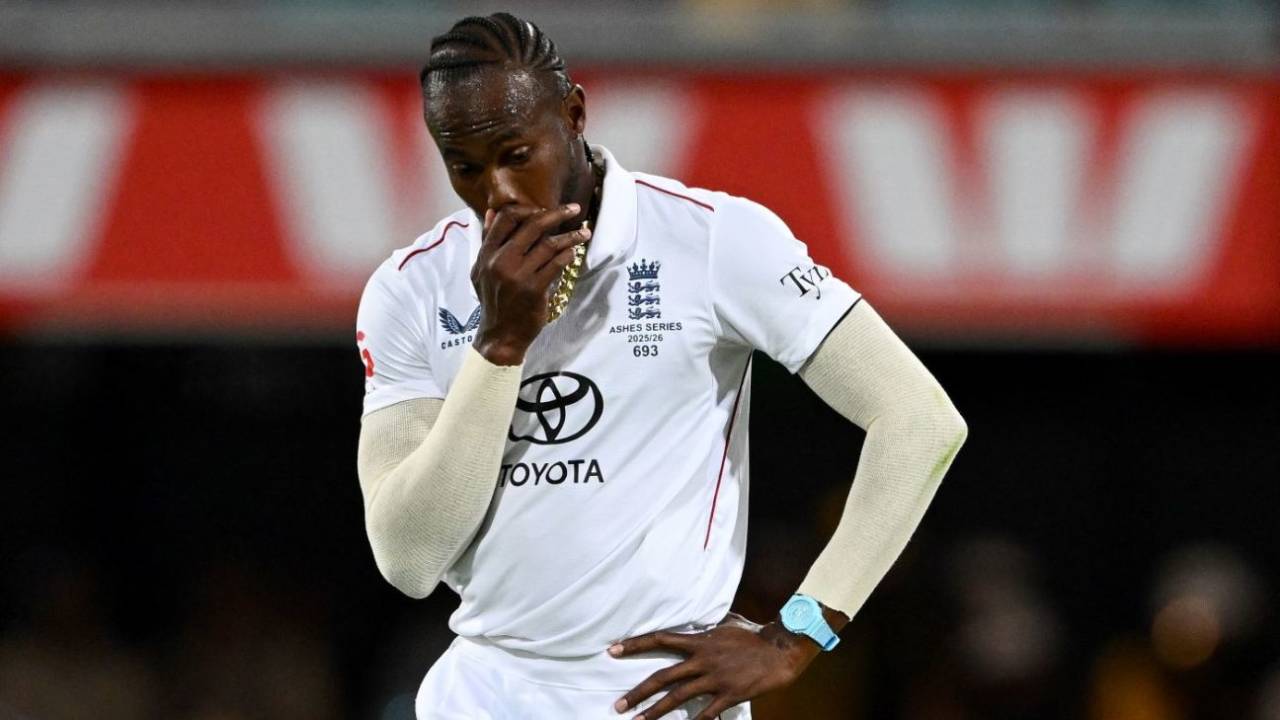
England enters their first Test match in five months at Lord’s against New Zealand without the services of Jofra Archer. Despite being a centrally contracted player, the star fast bowler has been ruled unavailable by Rob Key, England’s managing director. This decision has sparked widespread discussion regarding the future of player management in an era dominated by global franchise leagues.
The Rationale Behind the Decision
When the 15-man squad for the opening Test was revealed, the ECB emphasized a strategic approach. According to Rob Key, the focus for Archer is on “building him up for red-ball cricket after a long six months on the road.” Having returned to Test cricket last summer after a four-year hiatus, Archer’s journey has been arduous, involving high-intensity commitments including the Ashes and the T20 World Cup, followed immediately by his participation in the IPL.
The primary issue lies in bowling volume. Archer has not bowled more than four overs in a single match since the third Ashes Test in December. Following his exit from the IPL, where he secured 25 wickets for the Rajasthan Royals, he returned to Barbados for a brief period of rest. England’s management insists that a quick transition back to the rigors of Test match bowling could be detrimental to his long-term fitness.
The Complexities of IPL Participation
Could the ECB have prevented Archer from playing in the IPL? Theoretically, yes, but doing so would have carried significant risks. The ECB has formal agreements with the BCCI regarding the granting of No-Objection Certificates (NOCs), and any attempt to restrict player movement could potentially lead to friction with the BCCI or even jeopardize the player’s desire to represent England. The modern landscape is one where national boards must navigate the financial power of franchises while maintaining the sanctity of the international calendar.
Workload Concerns and Coaching Perspectives
Kumar Sangakkara, the head coach of the Rajasthan Royals, has provided insight into the difficulties of preparing for red-ball cricket during the IPL. “It is very difficult to get your bowling loads up when you’re only bowling four overs,” Sangakkara noted. He acknowledged that the ECB was gracious in allowing Archer to complete his franchise commitments, with the understanding that a dedicated ramp-up period would be required afterward.
Leadership and Internal Friction
England captain Ben Stokes has addressed the situation with nuance, acknowledging that he understands the frustrations of fans and critics alike. However, he cautioned against a hardline approach. “There is a situation where it could get messy, and players like Jofra might not play for England again if you handle it in a different way,” Stokes remarked. He emphasized that Archer remains fully committed to the England team, despite the current scheduling conflict.
Public and expert reaction has been sharply divided. Former players like Mark Butcher have labeled the situation “absolutely ridiculous,” suggesting it undermines the value of central contracts. Similarly, former captain Michael Atherton expressed concerns over what he perceived as the ECB’s “complete subservience” to the franchise system.
What Lies Ahead
The uncertainty continues regarding when exactly Archer will return to the longest format. Head coach Brendon McCullum indicated that the team is monitoring his progress: “We’ve seen in the past we can leave Jof to his own devices, work on his game and follow a plan that has been set. When we see him, we’ll work out where he sits and if he’s available for the second Test.”
Looking at the broader summer schedule, Archer is anticipated to headline England’s white-ball efforts against India in July, followed by a stint in The Hundred. With the subsequent three-Test series against Pakistan commencing shortly after the conclusion of The Hundred, the scheduling remains exceptionally tight. Ultimately, the absence of Jofra Archer highlights the precarious balancing act that modern cricket boards must master to keep their elite talent both available and healthy across all three formats.