Darcey Carter Hopes for More Cricket After Scotland Threaten T20 World Cup Upsets
Darcey Carter’s Disappointment Amidst Personal Triumph
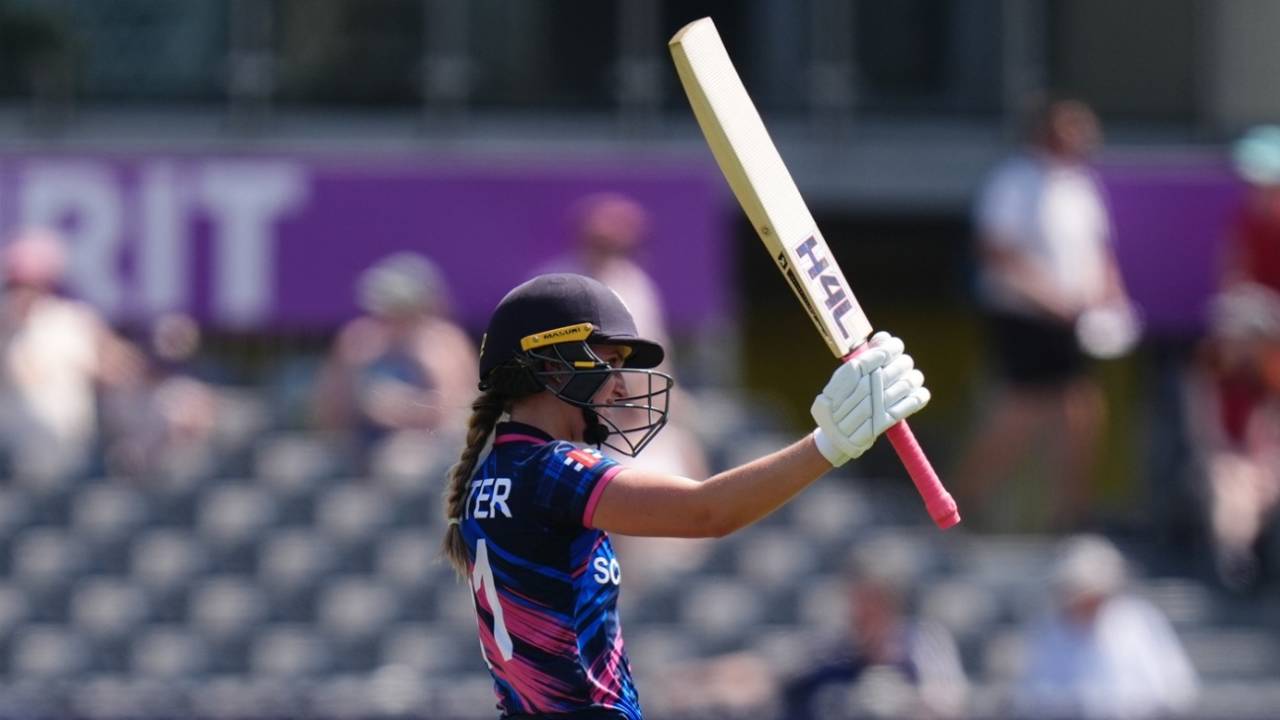
Imagine being told you’re one of the leading run-scorers in a major international tournament, surpassing even cricketing stalwarts. For Darcey Carter, such an achievement at the Women’s T20 World Cup 2026 might sound like a dream come true. Yet, despite her formidable individual performance, a hint of disappointment shadowed her words after Scotland’s recent loss to New Zealand in Bristol. Carter’s perspective is clear: personal milestones pale in comparison to team victories. “It’s great to be able to score runs, but at the end of the day, if the team’s not winning, those runs are almost irrelevant for me personally,” Carter stated during the post-match press conference. This sentiment underscores a professional athlete’s ultimate goal: collective success over individual glory, even as she acknowledged her good form.
Carter’s two half-centuries in the tournament, while showcasing her exceptional batting prowess, both came in losing efforts for Scotland. First, against West Indies in Leeds, and then against New Zealand. These performances were particularly crucial as Scotland’s marquee players, the Bryce sisters Kathryn and Sarah, had not fired. Carter’s ability to shoulder the batting responsibility in high-pressure situations has illuminated a previously unseen depth within Scottish cricket, a significant development since their last major tournament appearance. Her commitment to the team is evident in her reflections, “I’m quite pleased that I’ve managed to put on some good scores. The last time I was here, I probably didn’t get as many runs as I would have liked at the last World Cup. And actually just taking a bit of ownership for this team and trying to put us in the best positions possible is really what matters to me most.”
Scotland’s Remarkable Transformation and World Cup Journey
Scotland’s journey in the T20 World Cup has been one of remarkable transformation. After their debut in the 2024 tournament saw them lose all four matches by significant margins, scoring only 19 runs in four innings, the team appeared to be significantly outpaced by larger cricketing nations. However, the narrative has dramatically shifted in 2026. Scotland initiated their campaign with a historic victory over Ireland, marking their fifth World Cup game and their first win. This triumph is particularly noteworthy considering Ireland’s extensive winless streak across five editions and 21 matches, highlighting Scotland’s accelerated progress in the sport. The contrast was stark when observing both teams in action on the same day: Ireland struggled against Sri Lanka, while Scotland posed significant challenges to defending champions New Zealand during both powerplays. They also pushed West Indies to a close finish and demonstrated admirable resilience with the bat against England, signaling clear positive signs of their progression on the global stage.
Challenging the Big Teams and Identifying Areas for Growth
The Scottish squad expresses immense pride in their competitive spirit. “We’re quite proud of how we have held ourselves, and how we’re really giving good competition to these big teams,” Carter commented. While there’s a degree of disappointment regarding their inability to close out games, the ability to set up competitive matches represents a substantial leap forward from their previous performances. “There’s probably a bit of disappointment that we’ve maybe not finished the games as well as we would have liked. But to be able to set the games up in that position is probably something we didn’t do when we played last time. So although we’re not getting the results that we may want, the improvement from the past two years is obviously pretty clear,” she added, emphasizing the tangible growth within the team over the last two years.
The Critical Need for More High-Profile Cricket
Scotland’s impressive run in the 2026 World Cup is not an overnight success but a culmination of consistent effort. Since the last T20 World Cup, they have played 25 matches across various series, including a quadrangular series in Thailand, the ICC Emerging Trophy, a T20 World Cup Qualifier in Nepal, and a home tri-series. Out of these, they have secured 17 victories, indicative of a burgeoning winning culture. However, a significant challenge remains: the lack of exposure to higher-ranked, Full Member nations. Bangladesh, whom they played twice in a tri-series, was the only Full Member opposition they faced during this period, securing one win. This highlights a pressing need for more engagements against top-tier teams.
“We don’t play as much cricket as we would like,” Carter articulated, pinpointing a critical barrier to their continued development. “Coming into these tournaments, it’s quite difficult to go straight up against the best opposition without much practice against higher-ranked teams. Our main goal would probably be to be able to get more cricket in against better ranked teams and get more experience. Then, when we come on the world stage where there’s lots of pressure, we can deal with that a bit better.” This plea for more competitive fixtures is central to Scotland’s aspirations for sustained improvement and their ability to perform under the immense pressure of global tournaments.
Leveraging Domestic Experience and Aiming for Professionalism
An invaluable asset for Scottish cricket is that almost all their squad members, with the exception of Chloe Abel, are actively involved in English domestic cricket. This exposure provides them with regular opportunities to compete against higher-profile players and hone their skills in a professional environment. However, they are not yet part of the Women’s Championship, which represents the next crucial step towards achieving full professionalism and securing consistent, high-level competition.
“The more cricket you play, the more experience you get, and the better you are in those sorts of situations,” Carter explained. “We’re still quite a young team. We’ve not all played a lot of international cricket. Some of these teams we’re playing against have obviously got really talented and experienced players.” This statement encapsulates the developmental stage of the Scottish team, emphasizing that while talent is present, experience against world-class opposition is paramount for their growth. Their final opportunity to secure another win in the tournament comes when they face Sri Lanka on Friday, a match that will further test their mettle and determination.