Hardik Pandya Reflects on Mumbai Indians’ Struggles After Loss to KKR
A Challenging Night at Eden Gardens
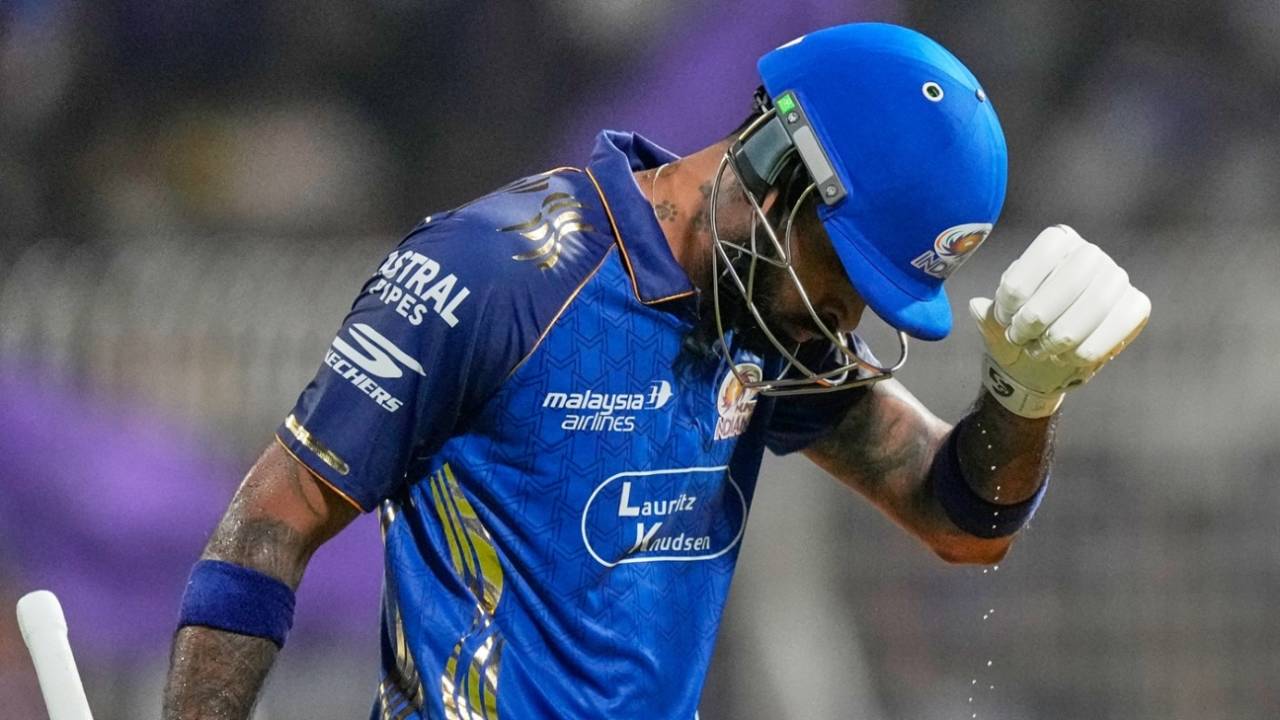
Mumbai Indians faced a difficult outing in their latest Indian Premier League clash against the Kolkata Knight Riders. Despite a spirited bowling effort, the team ultimately fell short, failing to defend a modest total of 147. The loss underscored a season plagued by inconsistency, with MI finding themselves at 46 for 4 by the end of the powerplay—a position from which they never truly recovered.
The Partnership Problem
Statistics often tell the story of a game, and this match was no exception. Six of Mumbai Indians’ eight partnerships failed to cross the 20-run mark. Captain Hardik Pandya, reflecting on the post-match disappointment, noted that the team was likely 20 runs short of a competitive total. The middle-overs period proved particularly stagnant, as both Pandya and Tilak Varma struggled to accelerate against a challenging KKR attack.
Hardik Pandya and Tilak Varma managed 26 off 27 and 20 off 32 respectively. This partnership recorded one of the lowest strike rates for the No. 5 and No. 6 positions in an IPL innings where both players faced at least 20 deliveries. Pandya acknowledged that had either of them remained at the crease for a longer duration, the outcome might have been different.
Pitch Conditions and the Bowler’s Perspective
The surface in Kolkata provided a unique challenge, one that deviated from the high-scoring trend often seen in the tournament. KKR’s Rovman Powell described it as a ‘typical Caribbean wicket,’ characterized by the ball stopping on the surface. A total of 14 wickets fell across the 38.5 overs, showcasing the difficulty batsmen faced throughout the evening.
Interestingly, Hardik Pandya expressed a preference for these conditions. Amidst a season dominated by batting records, Pandya welcomed a surface that offered assistance to the bowlers. He stated, ‘I don’t mind playing on this sort of wicket, where bowlers have something to do. I think IPL is becoming quite batting-dominant, and bowlers are feeling helpless. Today’s game gave bowlers something to work with, which forced the batsmen to play with more technical precision.’
Fielding Woes Continue to Haunt MI
While the batting total was far from ideal, Mumbai Indians were briefly in a position to contest the result when KKR found themselves at 73 for 3 after nine overs. However, the game slipped away due to missed opportunities in the field. Two crucial dropped catches allowed Rovman Powell and Manish Pandey to construct a match-winning 64-run partnership.
Pandya did not shy away from addressing these shortcomings during the post-match presentation. The captain admitted that fielding has been a persistent issue throughout the campaign. ‘We have dropped a lot of catches, which obviously no one wants to do,’ Pandya remarked. ‘There is no hiding from that. If you want to win games, you need to grab all the chances—even the half-chances. When you drop catches that have the potential to change the game, you are always left chasing the result.’
Looking Ahead
As the season progresses, Mumbai Indians find themselves at a crossroads. The combination of early-order collapses and defensive lapses in the field has placed immense pressure on the bowling unit. For a franchise known for its tactical prowess and championship pedigree, the focus will now shift to addressing these fundamental errors. Whether they can turn their campaign around will depend on their ability to stabilize the batting lineup and maintain composure when opportunities arise in the field.
Ultimately, the loss to KKR serves as a stark reminder of the margins in T20 cricket. As Hardik Pandya alluded, success in the IPL requires more than just raw talent; it requires the discipline to build partnerships and the reliability to execute under pressure. With the tournament reaching a critical stage, every missed catch and every stagnant partnership carries weight that a team of MI’s stature can ill afford.