
BCB appoints only one vice president as Fahim Sinha takes role
Administrative Reorganization within the BCB
The Bangladesh Cricket Board (BCB) has entered a crucial administrative phase with key decisions shaping its leadership structure. In a highly anticipated development, the BCB appoints only one vice president as Fahim Sinha takes role in the newly formed committee. This decision represents a strategic shift in the board’s organizational approach, establishing a streamlined governance path for the immediate future of cricket administration in Bangladesh.
While the board has historically operated with a different leadership layout, the current decision-makers have chosen to consolidate responsibilities. Fahim Sinha, a highly experienced and respected figure within the sporting community, stands as the sole individual appointed to the vice-presidential position at this initial stage. This focused appointment comes at a time when other newly elected board members are yet to be assigned their specific portfolios and administrative responsibilities.
The Constitutional Background of the Vice-Presidency
To understand the significance of this move, it is essential to examine the constitutional framework of the Bangladesh Cricket Board. According to the official BCB constitution, the board is legally permitted to have up to two vice presidents serving concurrently. This dual-vice-president model was actively utilized in the past to distribute administrative duties and manage the extensive responsibilities of the cricketing body.
For instance, under the previous board led by Aminul Islam Bulbul, there were indeed two vice presidents appointed to handle various administrative tasks. However, the newly elected committee has decided to deviate from this historical precedent by filling only one vacancy for the time being. This decision highlights a deliberate, phased approach to organizing the board’s top-tier leadership, with Fahim Sinha taking on the sole vice-presidential responsibility for now.
Tamim Iqbal Explains the Board’s Strategic Consensus
BCB President Tamim Iqbal provided clear insights into the decision-making process behind this appointment. Addressing questions from the media and cricket stakeholders, Tamim emphasized that the choice to start with a single vice president was the result of a democratic consensus among all board members.
Tamim revealed that he was the individual who proposed this streamlined leadership model. He clarified that the decision does not rule out the possibility of appointing a second vice president in the future if the administrative workload demands it.
“I was the one who proposed appointing only one vice president for now. That doesn’t mean we won’t appoint another one in the future,” Tamim Iqbal explained. “If the board feels it is necessary, we will definitely appoint another vice president. For now, the board agreed on this decision. Fahim Sinha was selected with everyone’s consent.”
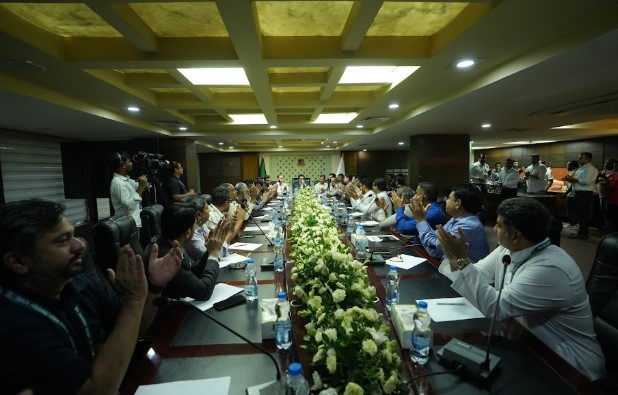
The BCB President went on to describe the collaborative atmosphere within the newly formed committee, emphasizing that individual preferences were set aside in favor of a unified board decision. This unified front was demonstrated by a show of hands among the members during their official meeting.
“It doesn’t matter what you or I think individually,” Tamim added. “The board decided to start with one vice president, and everyone supported it by raising their hands. Again, this doesn’t mean another one won’t be appointed in the future. It can come from any category if needed.”
Addressing the Integrity of the E-Voting System
In addition to discussing the administrative appointments, President Tamim Iqbal also addressed the ongoing debates surrounding the board’s election process, specifically focusing on the controversial e-voting system. The e-voting mechanism had been a subject of intense discussion and controversy during the previous election cycle, raising concerns about the transparency and fairness of the electoral process.
Tamim clarified his position, stating that while e-voting is an official part of the BCB constitution, the method of execution must be carefully monitored to prevent unfair practices. He emphasized that individual voting from home is perfectly acceptable, but group voting from a single location poses a risk to the integrity of the election.
“I have spoken about e-voting before as well. My main concern was when 30-40 people voted together from one place. That was my issue,” Tamim stated. “If someone votes individually from home, that’s different. But if 20–30 people sit together and vote, that becomes unfair. E-voting is part of the constitution.”
Looking Forward to the New Administration’s Tenure
With Fahim Sinha officially taking up his role as the sole vice president and the board aligning on electoral integrity, the Bangladesh Cricket Board is setting a transparent and structured tone for its new tenure. By focusing on a consensus-driven approach and ensuring that constitutional rights are exercised fairly, the BCB aims to lead Bangladesh cricket into a stable and successful era. The coming weeks will likely see the assignment of remaining portfolios, completing the administrative framework of the governing body.