
‘Positive move’ – Gambhir throws his weight behind red-ball-pink-ball switch
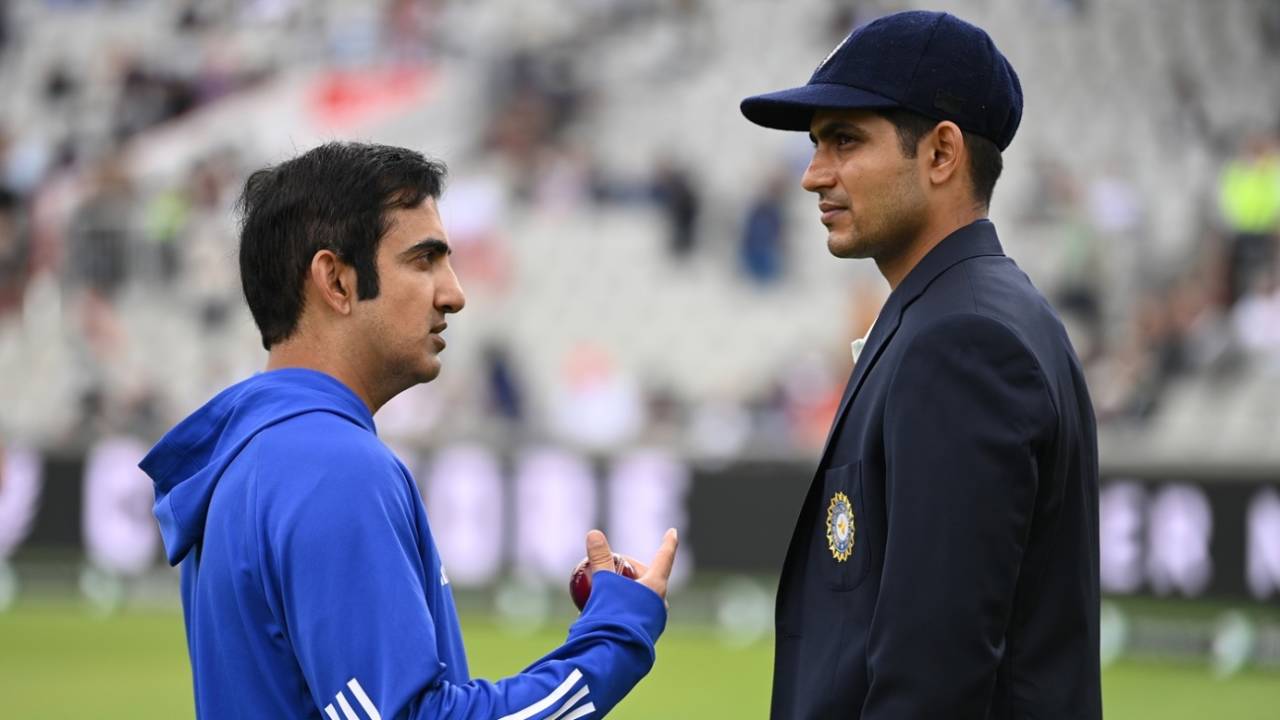
In a significant endorsement that could reshape the dynamics of Test cricket, India head coach Gautam Gambhir has thrown his considerable weight behind the International Cricket Council’s (ICC) proposed idea of switching from a traditional red ball to a pink ball before the start of a Test match that is likely to be affected by bad light. This innovative concept aims to mitigate the frustrating impact of weather interruptions, ensuring that crucial encounters reach a definitive conclusion.
Gambhir articulated his strong support on the eve of India’s one-off Test against Afghanistan in New Chandigarh, emphasizing the fundamental principle of creating opportunities for a result. “I love that because I’ve always believed that if there’s an opportunity to get a result, you should always have that opportunity,” Gambhir stated. His perspective stems from the potential unfairness of a match, especially one with high stakes like a World Test Championship (WTC) final qualifier, being derailed by diminishing light. He posed a pertinent scenario: “Imagine if you are playing the last Test match before the World Test Championship final and you have the chance to win that Test match to qualify, and because of bad light, it’s not happening. So I’m all for it.”
Addressing the Nuances of the Pink Ball Switch
The proposed switch, while forward-thinking, comes with its own set of conditions. For the change to be implemented, both team captains would need to agree, highlighting the collaborative spirit intended behind the rule. Gambhir acknowledged the potential challenges for players adapting to a different ball mid-match, stating, “I know it could be a little unfair and difficult for the players.” However, he quickly juxtaposed this with the larger injustice of an unfulfilled five-day Test due to external factors. “Imagine working hard for two years and the last Test match before the World Test Championship final, if you don’t play five days because of bad light, how unfair that could be,” he reasoned.
From Gambhir’s viewpoint, the benefits far outweigh the drawbacks. He hailed the proposal as a “proactive move” and a “positive move,” expressing hope that participating teams would embrace it with a similar constructive outlook. The shift to a pink ball under lights is a well-established format in day-night Tests, designed specifically to address visibility issues. Extending this flexibility to conventional Tests where bad light threatens to dictate outcomes represents a significant step towards preserving the integrity and excitement of the longest format of the game, ensuring that skill and strategy, rather than weather, determine the winner.
India’s World Test Championship Aspirations
While discussing the broader implications for Test cricket, Gambhir also touched upon India’s current standing in the World Test Championship cycle. Following a recent 2-0 whitewash against South Africa in an away series, India currently sits sixth on the WTC table, with 48.15% points accumulated from nine games. Despite this setback, the head coach exuded confidence and optimism regarding India’s prospects of reaching the WTC final.
“Till you have the opportunity to qualify for the World Test Championship final, you are always optimistic because we know the kind of quality we have and the kind of talent we have,” Gambhir affirmed. His unwavering belief in the squad’s capabilities is palpable, reflecting a deep conviction within the dressing room. “I don’t think there is any reason not to believe that we cannot win the World Test Championship and that is what not only we but everyone sitting in the dressing room believes,” he added. He acknowledged that “one-odd bad series here and there” can happen, but stressed the inherent talent and “hunger” within the team to overcome challenges and perform at the highest level.
Gambhir: ‘Sai Sudharsan Hasn’t Got a Fair Chance’ in Test Cricket
Beyond the strategic discussions surrounding rule changes, Gambhir also delved into critical team selection matters. Although the Afghanistan Test is not part of the current WTC cycle, it serves as a vital fixture in India’s calendar between now and August, when they embark on a two-Test tour of Sri Lanka, followed by another two Tests in New Zealand in November. These matches are crucial for assessing talent and solidifying combinations, particularly for the vacant No. 3 batting position.
The No. 3 spot has become a point of focus for India following Shubman Gill‘s shift to No. 4 after Virat Kohli‘s retirement from Test cricket. The primary contenders for this crucial middle-order position in the upcoming match against Afghanistan were identified as B Sai Sudharsan and Devdutt Padikkal. While Padikkal enjoyed a stellar Ranji Trophy season, amassing an impressive 543 runs at an average of 60.33, Gambhir made it explicitly clear where his preference lay, advocating strongly for Sai Sudharsan to be given more opportunities.
Gambhir expressed his view that Sai Sudharsan had not yet received a truly equitable chance to prove his mettle in Test cricket. “Honestly, Sai hasn’t got a fair chance,” Gambhir stated, highlighting the limited number of Test matches Sudharsan has played – a mere handful so far, yielding 302 runs at an average of 27.45. The coach further contextualized Sudharsan’s early Test career by noting, “He started his Test career in England, which we all know is not the easiest place [to bat in].” This challenging initiation, Gambhir implied, made it difficult to form a complete judgment based solely on those performances. He also pointed to Sudharsan’s “phenomenal run in the IPL,” suggesting that his white-ball form and underlying talent warranted a longer look in the Test arena. “We have got to give him a fair chance,” Gambhir emphasized, stressing the importance of consistent backing for young talent.
When questioned about the natural temptation to include Padikkal in the playing XI given his exceptional red-ball form in the Ranji Trophy, Gambhir reiterated his philosophy on player selection and development. He acknowledged Padikkal’s strong performances but maintained that every player must await their opportune moment. “You can only pick XI, unfortunately. Sometimes you just have to wait for your opportunity,” Gambhir explained. His approach is rooted in the belief that once a player is selected, they should be given a substantial run to establish themselves. “I’ve always believed that guys who we are going to play, we give them a fair run,” he added.
Furthermore, Gambhir underscored that Sai Sudharsan’s current form is far from poor, citing his impressive tally of 722 runs in the Indian Premier League (IPL). He cautioned against making hasty judgments based on a very limited number of Test appearances. “If judging players by only four or five Test matches is good enough, then I feel that we will never be able to build something,” Gambhir argued, advocating for a long-term vision in player development rather than short-term results. He concluded by assuring that Padikkal’s opportunity would indeed come. “So, hopefully, he [Padikkal] will get his chance. Whenever his time comes, we’ll give him a fair run as well. It’s not about giving someone five Test matches and someone else one Test match. If we give someone a fair run, we’ll give the other guy whenever he gets the opportunity comes a fair run as well. But, at the moment, I think we’ve got to give Sai a fair run. He’s a world-class player and I’m sure he’ll come good.”