Babar returns while understrength Australia look to 2027 and beyond – Babar Azam Returns as Understrength Australia Eyes 2027 World Cup in Pakistan ODI Series
Pakistan Faces Australia in ODI Series with Eye on 2027 World Cup
The countdown to the 2027 ODI World Cup has officially begun, and while it remains 16 months away, the window for teams to solidify their combinations and strategies is rapidly shrinking. Both Pakistan and Australia are set to clash in a significant ODI series, offering precious opportunities to fine-tune their squads ahead of the global showpiece.
Australia has a limited schedule of 15 ODIs before August 2027, with six of these critical encounters slated for Pakistan and Bangladesh over the next fortnight. While the stifling heat of Pakistan might not perfectly simulate the conditions of southern Africa, these matches provide invaluable experience and a chance to trial various player combinations under competitive pressure.
Pakistan’s Reinforcements and Strategic Adjustments
Pakistan enters this series with recent ODI experience, albeit having suffered a three-match series loss in Bangladesh in March. In response, the selectors have made significant, yet characteristic, changes to the squad. The much-anticipated return of key players Babar Azam, Naseem Shah, and Shadab Khan signals a strong intent. Notably, Shadab Khan makes his comeback to ODI cricket after missing action since the 2023 World Cup. The squad also introduces a fresh wave of talent, including uncapped wicketkeeper-batter Rohail Nazir, left-arm spinner Arafat Minhas, and fast bowler Ahmed Daniyal.
A striking omission is Mohammad Rizwan, who previously captained Pakistan to an ODI series victory against Australia just over 18 months ago. Other players dropped from the Bangladesh tour include Faisal Akram, Faheem Ashraf, Hussain Talat, Mohammad Wasim Jnr, and Saad Masood. Injuries and illness have also sidelined Saim Ayub, Fakhar Zaman, and Usman Khan, further emphasizing the team’s evolving composition.
Australia’s Depth Tested Amidst Absences
Australia faces this series with a significantly depleted squad, primarily due to the ongoing Indian Premier League (IPL), strategic workload management, and various injuries. Frontline pace bowlers Pat Cummins, Mitchell Starc, and Josh Hazlewood are all absent from the subcontinent tour for workload reasons, with Hazlewood still involved in the IPL playoffs. Travis Head, Xavier Bartlett, and Ben Dwarshuis were initially excluded from the Pakistan leg due to their IPL commitments, despite their respective teams having since exited the tournament.
Further compounding Australia’s challenges, Mitchell Marsh has succumbed to an ankle injury. Cooper Connolly, initially overlooked for the Pakistan series due to Punjab Kings’ anticipated IPL playoff run, will now fly to Pakistan as Marsh’s replacement, aiming to be available for the final two ODIs. In the absence of Cummins, Marsh, and Head, Josh Inglis is set to captain the side, a role he previously assumed when Australia lost the final ODI against Pakistan in Perth in 2024. Experienced campaigners such as Cameron Green, Alex Carey, Marnus Labuschagne, Adam Zampa, and Nathan Ellis will shoulder significant responsibility. The series also presents an opportunity for Matt Renshaw to solidify his position in Australia’s middle order and for Matt Short to re-establish his international credentials after losing his central contract. The inclusion of 19-year-old Ollie Peake and allrounder Liam Scott highlights Australia’s long-term vision, with Scott poised for an international debut following consistent domestic performances. The return of Billy Stanlake after a seven-year absence, alongside Riley Meredith, underscores the selectors’ focus on tall, high-pace quicks for the conditions expected in southern Africa for the World Cup.
Form Guide
- Pakistan LWLWW (last five completed matches, most recent first)
- Australia LWWWL
In the Spotlight: Babar Azam and Cameron Green
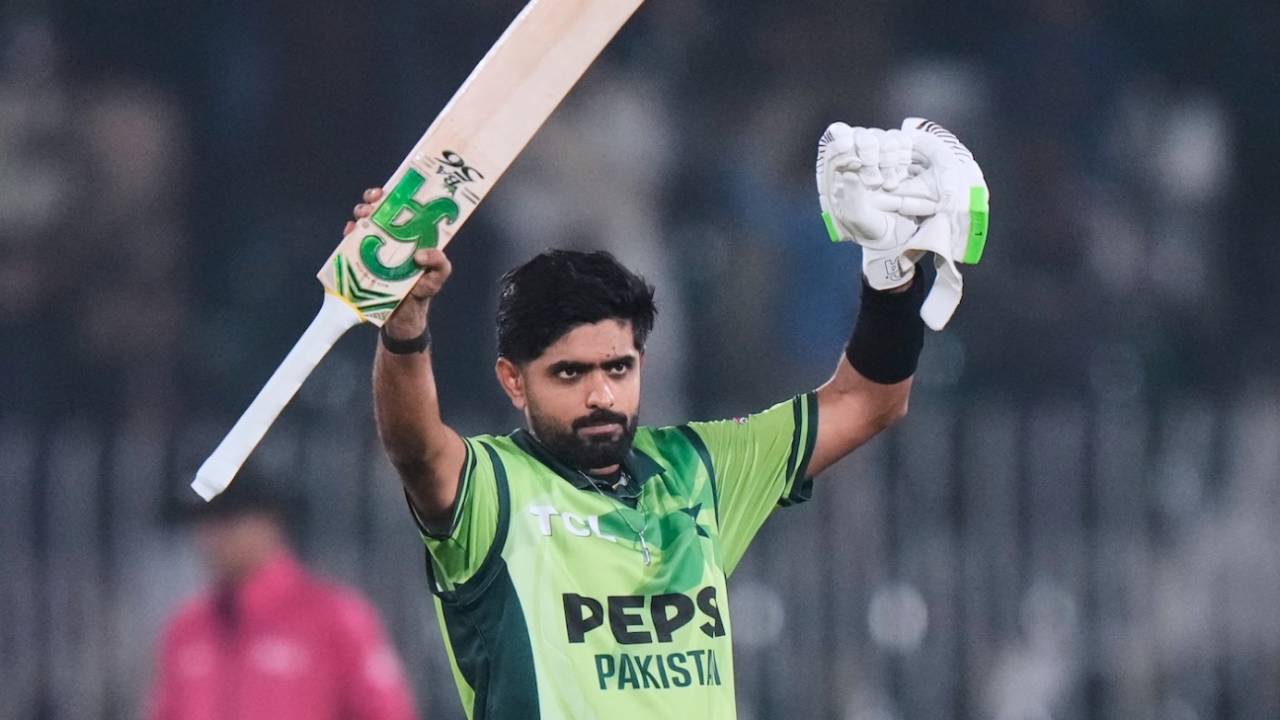
Babar Azam’s presence in the spotlight is almost a given. With more ODI centuries and a higher average than any other Pakistani batter with over 400 runs, his omission from the Bangladesh ODI tour following a challenging T20 World Cup was a talking point. His return to the ODI fold comes on the back of an outstanding Pakistan Super League (PSL) campaign, where he delivered the exceptional performances his critics demanded, leading Peshawar Zalmi to the title. This series against an understrength Australian attack offers Babar a prime opportunity to reaffirm his status as a cornerstone of Pakistan’s top order in his most prolific format.
Similarly, Cameron Green consistently finds himself under scrutiny. His place across all three formats for Australia has been a subject of considerable debate, despite his impressive 55-ball 118 not out in his last ODI in August of last year. That remarkable innings at number three, finishing from the 35th over after a record-breaking opening stand by Head and Marsh against South Africa, showcased his potential. Green missed Australia’s most recent ODI series against India to prepare for the Ashes. While he is more comfortable in the top order, the Australian team management sees significant potential in his finishing capabilities and appears set to trial him in that role, seeking a permanent replacement for Glenn Maxwell. Head coach Andrew McDonald has also highlighted Green’s vital role with the ball, noting his improvement throughout the IPL, suggesting he is expected to contribute substantially in the bowling department.
Team News: Pakistan Backs Experience, Australia Trials Youth
Pakistan is likely to field its strongest possible XI in the opening ODI to establish an early advantage in the series. Babar Azam is expected to slot back into the crucial number three position, while a balanced attack featuring three pace bowlers and two spinners will be well-suited to the local conditions.
Pakistan (probable): 1 Sahibzada Farhan, 2 Maaz Sadaqat, 3 Babar Azam, 4 Salman Ali Agha, 5 Abdul Samad, 6 Ghazi Ghouri (wk), 7 Shadab Khan, 8 Shaheen Afridi (capt), 9 Naseem Shah, 10 Haris Rauf, 11 Abrar Ahmed
Australia’s final XI remains a subject of speculation. The team needs a second stand-in opener alongside Matt Short, and the composition of the middle order is still evolving. While there is a temptation to play two spinners given the three available, the prospect of evening dew might deter such a strategy. All 14 squad members are considered options for the opening match, with potential international debuts for Ollie Peake and Liam Scott. Cooper Connolly will not be available for the first game due to his late arrival on match day.
Australia (probable): 1 Matt Short, 2 Alex Carey, 3 Marnus Labuschagne, 4 Josh Inglis (capt & wk), 5 Matt Renshaw/Ollie Peake, 6 Cameron Green, 7 Liam Scott, 8 Nathan Ellis, 9 Riley Meredith, 10 Adam Zampa, 11 Billy Stanlake/Matt Kuhnemann/Tanveer Sangha
Pitch and Conditions: Heat and Dew to Dictate Tactics
The weather forecast for Saturday in Rawalpindi indicates a slight cooling trend compared to the oppressive heat experienced earlier in the week, with thunderstorms also predicted. The matches are scheduled to begin at 4:30 PM local time to mitigate the impact of the extreme heat, but this late start means dew will likely become a significant factor in the latter half of the game. Consequently, the toss could play a pivotal role in the outcome of the match.
Stats and Trivia
- Pakistan has won their last two ODI series against Australia. The visitors have not secured an ODI series victory in Pakistan since 1998.
- Babar Azam requires just one more ODI century to surpass Saeed Anwar and claim the record for the most ODI centuries for Pakistan.
- Should Ollie Peake make his debut, he will become the fourth youngest Australian male to play ODI cricket.